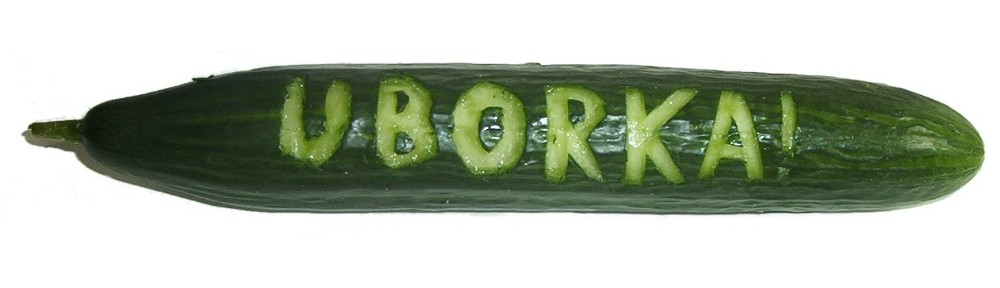
And here I am, for the second week running, serving drinks to the masses. And this week, as a special treat, the drinkies will have extra, exciting, added ingredients. Yum, I hear you cry. We’ll see about that.
I have a number of cockroach experiences that I could share with you, many of them pertaining to the same set of roaches mentioned by my esteemed colleague, the erudite Doctor Pockless, below. But I’m sure you’d like some fresh cockroaches, so I’ll tell you the one about me and Lil Sis grabbing a space to sit on the nice carpeted steps of the Red Bull stand at Budapest’s Pepsi Sziget festival a couple of years ago, only to feel little tickles on our backs. And our arms. And in our hair. Ugh, ugh, ugh.
Nuff of that.
Today’s cocktails, to which you have been invited as a little thank you from the Department of Literary Lepidoptery, for your attendance and attention at the little talks given by our friend, the elegant Doctor Pockless, would appear to have many legs. The excellent Doctor himself has chosen a beer, and I have therefore brought along a barrel, because there are always more requests for beer; in fact, I have it on good authority that he and Doctor Badgett have something to celebrate, and so will be sharing said barrel. And the maggots therein.
Fortunately, we are also able to provide hot drinks for those, like the kate, who show up already drunk. I hope she is sober enough to appreciate the aphid sprinkles; and perhaps she can persuade D to take a cup too, as we have just run out of betel nuts.
Further to the now well-established not-cocktail theme, I have a flagon of mead for Ade, whose song from last week, you’ll be pleased to note, contains the line, it’s like a fruitin’ swarm of bees. Which it is.
I expected Mark’s bee to contain honey, but instead it’s just yellow. For contrast, I have garnished it with a vine weevil. Mm, crunchy.
It worries me that Mr.D drinks so much vodka. I think he may have a problem, and in the spirit of caring concern that so much of you associate with Uborka, I’ve marinaded some blowflies in his bottle of smirnoff, to try and put him off.
Lyle may be disappointed, I’m afraid, because no grasshoppers were available. The best I could manage was a water-boatman and lemonade, on the rocks.
According to my sources, a stinger, as requested by Annie, is brandy and creme de menthe; I’m hoping this is correct, because it does compliment the colours of the dragonfly wings in the bottom of the glass.
Clear Blue Dave’s choice is somewhat controversial, as the spiders have not been popular this week. As such, I’m secretly giving him an upturned glass with a wasp beneath it. That’ll show him.
And just look at this for a coincidence: Pix orders spanish fly, obviously mistaking this for Sleaze Week, and look who should show up straight away? yes, the Sleazemeister Sevitz himself. Both your drinks contain a quantity of centipedes, mostly doing front crawl.
For myself, if there’s still time, I’ve got a glass of raspberries, which are leftover from making a summer pudding, served over ice and topped up with vodka and ginger ale. It’s most refreshing, and I bet you’re jealous. We used to have raspberries in our garden when I was a kid, and they always contained little biting beetles. But there aren’t any in this drink, because I’ve washed them.
Happy weekend, and thanks for all the bugs.
- Comments: 16
- Karen, if you want to surprise someone with an angry wasp under an upturned glass, it's al... - Dave
- And I never got to discuss my love of 1950's B-movies featuring oversized insects terroriz... - Dragon
- Smart - you're nicely covered for babysitters now. - Doctor Pockless
- well, you know, you and all the other uborkites. - krissa
- Krissa, I'm honoured. - Doctor Pockless
The Yoke of Profound Distraction
NOTE: Those of you thinking of leaving early to avoid the rush to the car park would do well to remember that cocktails will be served this afternoon following the final lectures of the Symposium. For more information, you’ll have to wait until the end of my little presentation.
Now, in recognition of your patience this week I have saved the most spellbinding butterfly until last. It is not for nothing that this last butterfly shares its name with Doctor Faust’s son by the beautiful Helena! Prepare to be bewitched by Euphorian Golden!

But before we go into detail about the darkly hypnotic motions of this magical moth, it seems in keeping with the rest of the week that I tell you a little about that other Euphorion of Greek ancestory. A native Athenian born around 275 B.C, wealthy Euphorion assisted in the formation of the Royal Library at Antioch (from whence I possess a handful of overdue books on Lepidoptery). A man after my own heart, he had a taste for archaic and obsolete expressions that has rendered his works almost unreadable, but the hardy among you might savour his mythological epics, amatory elegies, epigrams, and best of all, a highly esteemed early satirical poem later translated by emperor Tiberius himself.
In Goethe’s version of the timeless Faust legend, the famous doctor’s son is also named Euphorion. Goethe wrote that the character represented Poetry itself in the manner of the tale of Icarus. His yearning for love, freedom, and heroism brings him into disequilibrium with all that is Earthly, and he is therefore characterised by a tragic imperfection as of one not meant for this world.
So too we have Euphorion Golden, that rarely seen miasma of the night with her wings of vivid sulphur. It is said that to lay your eye upon her wing is to know madness. Others have attempted to distill the sorcery from her sails with pestle and mortar in order to know Faust’s life eternal. If not for my own pact with the Devil, whom I met at a crossroads in the guise of a certain fabled blues singer, I’d be tempted to dabble.
Before moving on to a much needed drink I leave you with the alarming tale of a North Queensland butterfly collector who happened upon a curious abberation of the Euphorion Golden in her garden. What this story does not tell you is what really happened to her. But that I shall leave to your imaginations, which surely shimmer with ghostly mirages of yellow. May your mind be the yoke of profound distraction!
I hope you’ve enjoyed this week of lepidoptery as much as I. We can now see how the butterfly world holds the key to great swathes of antiquity and the Art that lies therein. Sweet przepustnica, I thank you for being my muse this long week of soaring temperatures.
Now, as promised, we must retire to the cooling shade of naughty Papilio Antimachus, who in recompense for her damage to the University grounds must provide the much needed breeze for this afternoon’s cocktails. Those of you who had the patience to read to the end, or the cheek to simply scroll down to the bottom of the page, may place your order for cocktails in my pigeonhole, below. I hardly need tell you what the theme is, but if you have a cockroach tale to share, I’ll work this damn pun into my lecture if it kills me.
And then Mephistophles will have a thing or two to say.
- Comments: 15
- I'll have an american beer monkey bug please. - Adrian
- I'll have a flaming spanish fly. Thank you kindly. ... - pixeldiva
- A Silver Spider for me, please! Ta. ... - Dave
- Thank you, Mr. D. I have since discovered that butterfly is leptir in most of the Balkan t... - Doctor Pockless
- I would like a Stinger please,- no cockroach stories, but we once went camping (illegally)... - annie
Keats’ Dung Beetles
Ecology as a whole is a…hobby of mine.
Much like the good Dr. Pockless, whose line in lepidoptery veers off the chart of scientific intrigue towards something which I shudder to think of as being near to, or at least in the same postal district as, sadism, my interest in biological spheres is not limited to the heaving bosoms of the keen female English students who line the front rows of my classes.
I digress.
The many crossovers between the field of poetical endeavour and that of our animal chums are more frequent than you might think. If the field of poetical endeavour is, for example, a large, spacious field, well grassed with the occasional clump of daisies or dandelions and bordered with well-kempt hedgerows, then the field of ecology is over the hedge right next door, and there are lots of gates.
The grass in the field of poetical endeavour is greener. This is because, despite the combined efforts of every member of the animal kingdom, more…(shall we be kitsch here? Shall we call it by what it is? Of course not! We are civilised people! Kitsch is what we do)…more useful fertiliser is produced in the world of English Academia.
This nitrate advantage comes about as a natural fringe benefit to the huge arena of debate and discussion which goes on in the field of poetical endeavour. Myself and Doctor Pockless are, of course leading advocates of what has come to be known as Pockology, which is currently the main source of this brown gold.
It is not new, however.
The legendary John Keats grew weary of extended hand-waving debates over the mustard pots and cruets in the refectory of his home university of Derby. He viewed the whole process of academics arguing with poets over what they themselves meant as somewhat useless, and hence unleashed his fearsome genius upon those who walk amongst the groves of Academe, in his poem of the October of 1789, on Thursday the 18th, just after teatime.
Dare thee to question mine heart and mine pen?
My poems are open to all who might ken
whose eye and whose hand can read or turn page
not talk about sh*te and engender mine rage
to all but you fooles it is patently clear
mine wordes are quite simple, not fuĂ©ll’d by beer
yet you debate on nothinge, you squabble on nit
push around you dung beetles, your big balls of -[Censored]
“Dung Beetle” was revered as a poetical term of both the highest praise and the lowest of the low-brow insults (depending on the season, the poet concerned, several meteorological conditions and the geographic context, of course – nothing in poetry is simple) for nearly three hundred years.
Until, one day, a young intrepid explorer, Yangston MacCavity, financed by the Imperial Society for the Furtherance of The Understanding OF Faeces (ISFOTUOFF) on his four year mission to go, Ecologically speaking, where no man had gone before, catalogued the most common type of dung beetle on the continent of Asia as Shiteaterus Maxipongingus or ‘Keats’ Dung Beetle’, rather taking the shine off the whole business.
- Comments: 5
- Thank you D, I feel more than suitably immortalised. - Doctor Badgett
- Tell that D, foecals again with rhymes like that, he'll be in trouble. - Lyle
- Badgettman, Badgettman, Does whatever a badger can. Is he a geek? Just this week, He decid... - D
- Thank you, Pockers. I'm now off home to pick up my typewriter and Complete Works and do my... - Doctor Badgett
- Well dung! - Doctor Pockless
The Day Of The Ants
And lo, on the sixth day it came to pass. As was written in the scriptures the pavements opened (well there’s a crack in the concrete, but quite frankly, I think it’s been there a while now) and the multitudes did erupt forth in a frenzied search for blood (again unconfirmed, sorry, none of the ants could persuaded to comment).
That’s right, the path outside my back door is literally and figuratively crawling with flying ants. The aforementioned crack in the concrete is like Kings Cross at rush hour, albeit without the huddles dotted along the platform awaiting the arrival of carriage doors.
Braving the mob, I tried to get some photos of the event, but my camera has decided that the ants are two small to be of importance and busied itself with focussing on the nearest large object instead. I’m just glad that all of this action is taking place outside; I remember only too well the sight of hundreds of big, flying ants trying to escape through the kitchen window when I was a kid.
Stuart’s prediction isn’t completely true though. He stated that “always after rain, the flying ants come.” And we haven’t had any rain for a couple of days. I can only surmise that the ants are piggy-backing onto my WiFi home network to gain access to the Internet, and have been reading Uborka.
- Comments: 1
- I was out of Hatfield most of yesterday, but I too was more than a little freaked to see t... - Stuart
Wee Floaty Sleepy Thingies
I wasn’t really awake, I was just finishing a yawn, standing in front of the bathroom mirror which is illuminated from behind by fluorescent strip lights and there suddenly, floating in front of my eyes were those things. Those things always float in front of your eyes first thing in the morning when you’re just waking up. Somehow, and don’t ask me how for I know not how, my hand shot out and smashed palm down against the surface of the mirror, trapping one of the translucent little things.
Some say they float just on the edge of your vision, but I reckon they phase in and out of reality and we’re only ever attuned to seeing them in that moment of in-betweeness between sleep and wakefulness. I have never before known if they count as insects until now.
I removed my hand slowly from the mirror, aware that I’d just left a very large handprint on it. Dead center of where my palm had been however was a small circular squished mass of interdimensional insect. I peered closer at it, adding a noseprint to the mirror and picked up a pair of tweezers that Pix uses to tweeze those things that might need the occasional application of tweezers (it occurs to me now that perhaps I should have washed these after what I did next).
I peeled away one layer of carapace; the chitinous exoskeleton that had protected this little floating beastie from everything but the juggernaut of skin which had finally broken through. With the tips of the tweezers I rooted through the soft white fleshy insides like I was picking through a fleck of cottonwool and determined there and then that the floaty thingies that only appear at the edge of your vision first thing in the morning are in fact insects and have an internal nervous system akin to that of the common cockroach.
Thanks, it was nothing.
- Comments: 1
- Have any of youse guys visited: http://lovesinsects.blogspot.com/ Well worth calling on. - Mr.D.
I know an old lady…
Insects are fairly much ubiquitous. They are in our homes, our offices, our gardens, on the train, they take the bus – they even manage to get their way through two hours of queues and security checks and get on to trans-Atlantic aircraft.
But the one place that I’ve never felt comfortable with insects is on my dinner plate. The idea of chocolate-coated locusts appeals not at all and, in spite of their name, pan-fried mealworms probably wouldn’t make a great meal.
The question is – why exactly are we revolted by the idea of eating insects? Let’s face it, most of the edible ones spend their lives eating plants, so that’s no different to cows or sheep that we quite happily chop up and chew. And have you ever thought about which bits of the cow you’re eating in that sausage? You mean you thought they threw the cow’s arse in the bin??
I think it’s a culture thing. We’ve been conditioned to think that insects are somehow dirty (most, in fact, are very clean), and the sight of a few blowflies sitting on that dog poo on the pavement puts us off of the whole concept. We think that insects spread pestilence and disease, when most are actually extremely beneficial and do useful things like pollinating flowers so that we get nice fruits to eat, or chewing up vegetable waste so that we’re not forever wandering around in a six foot deep pile of festering dead leaves.
So maybe we should try some of these things. Will caterpillars be on the menu at the first ever Uborka summer barbecue?
- Comments: 3
- Perhaps she'll die. - Thunderbug
- Everyone will be drinking Mosquitos - they're like Mojitos, only with a bit more bite. - Graybo
- Will they be serving themed cocktails at the barbecue? Or is it a virtual one? - Mr.D.
The Humble Brown Second Best
Sadly, our gargantuan Papilio Antimachus broke free of her moorings during the night and did untold damage to the new ornamental gardens outside the science block, overturning a miniature decorative bridge, devouring saplings and causing the night watchman to scold himslef with the kettle. The butterfly and the watchman have both been subdued since, and naughty Antimachus is now flapping with less vigour where we have had her secured outside.
As ever, the Papilio Antimachus seems determined upstage the silver-medallist of African butterflies, Papilio Zalmoxis, the humble brown second best, the by-no-means-small runner-up in the contest to be Africa’s biggest butterfly.

Papilio Zalmoxis fit snugly in the back of my car, and I would have brought the specimen in to show you, but she escaped through the sunroof as I was approaching the gatehouse. She was last seen jeering at the giant specimen tethered outside this lecture hall from the upper boughs of a poplar.
But who was the somewhat awkwardly named Zalmoxis? The Thracian Dacians held that he was the only true God. In truth he was a former slave of the scientist and pastry chef Pythagoras who became very wealthy upon gaining his freedom, quite possibly by selling purloined theories about triangles on the local Geometry Market. He then went to Thrace and spun them some tall tales about the immortality of the soul, and (some say this was his master stroke) investing his wealth in the Stax record label (who would later give the ancient Thracian township of Memphis Otis Redding and Booker T. & The MGs).
But sound investments and a few clever theories are not enough to secure one the status of deity. Zalmoxis retired to a cave and made sure a rumour was spread that he had visited Hades. Three years later, when most were sure he was dead, he returned. As if this wasn’t enough, he’d spent his time in retreat studying medicine, so he could bolster the resurrection stories now being told with remarkable feats of healing.
As a consequence, when he really died he gave the world its second truly monotheistic religion, after Judaism.
Thus we might say that Papilio Antimachus is the butterfly of Zion, securing itself first place in mankind’s race for monotheism. Poor Papilio Zalmoxis could only ever come in second, and its moments of glory are brief, like the example given earlier in this lecture: mocking Antimachus from the safety of a nearby tree.
- No comments yet, but you can change that.
Thunderbugs

Thunderbugs are apparently also known as thrips. Their primary characteristic is that they get on your chips when you’re by the seaside. They appear in hot weather, tiny and black like a plague of grocers apostophe’s [sic].
I haven’t seen any yet this year, for which I am glad. There are enough creepy crawlies around here as it is.
- Comments: 2
- I think that there should be some sort of award, perhaps perpetuating the memory of the la... - Doctor Badgett
- When they arrive in plagues, as in The Great Thunderbug Plagues of Humberside in the early... - Doctor Pockless


